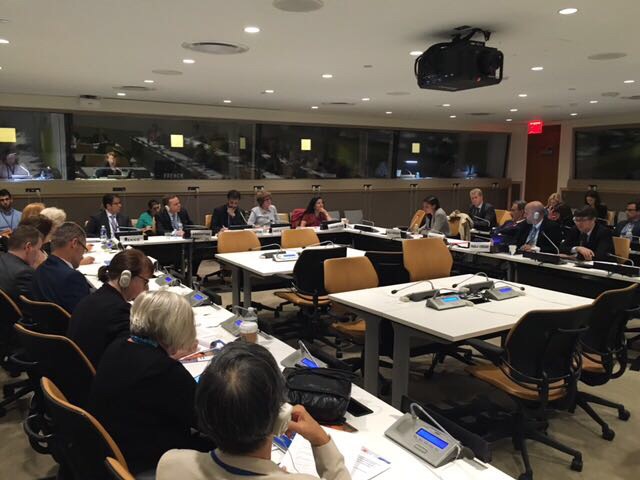
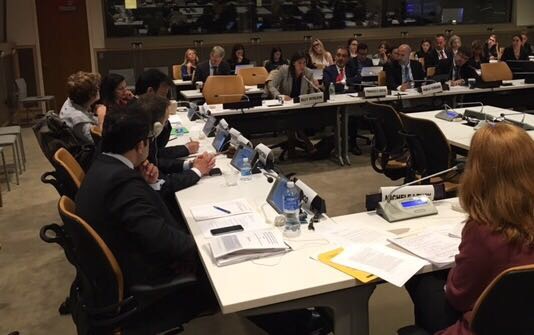
Ieri sono intervenuta ad un evento organizzato alla sede ONU in seno al Summit sui grandi movimenti di rifugiati e migranti, sul tema “Protecting human rights in the context of large movements of migrants and refugees”, organizzato dall’Alto Commissario dell’ONU per i diritti umani, insieme a PICUM e al Centre For Trust, Peace & Social Relations.
Ci siamo confrontati, tra gli altri, con Horacio José García (Direttore Nazionale della Migrazione in Argentina), Juan Jose Gomez Camacho (Ambasciatore messicano all’Onu), David Donoghue (Ambasciatore irlandese all’Onu), Kate Gilmore (Vice Alto Commissario per i diritti umani ONU), Lakshmi Puri (assistente del Segretario Generale Onu e vice direttrice esecutiva di UN Women e co-presidente del Global Migration Group Working Group sui diritti umani e l’uguaglianza di genere), e il Presidente della Croce Rossa Italiana Francesco Rocca.
Non nascondo che il caloroso applauso esploso alla fine del mio intervento, accompagnato da Lakshim Puri che grida “Wow!”, mi ha emozionato. Anche la Gilmore, che ha fatto un intervento strepitoso, è venuta ad abbracciarmi per ringraziarmi. Un bel momento.
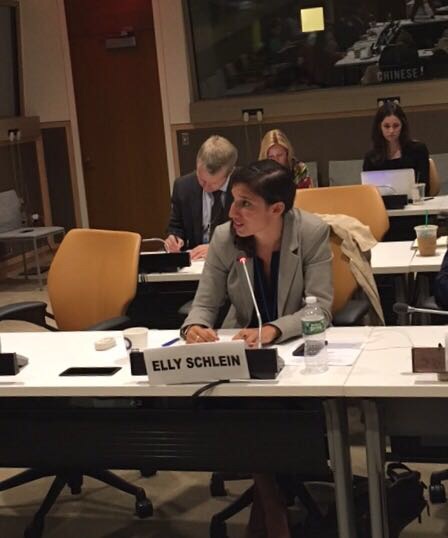
Ecco il testo, sia in inglese che tradotto in italiano:
“Excellencies, fellow delegates, Ladies and gentlemen,
first let me thank the OHCHR, the Platform for International Cooperation on Undocumented Migrants, the Centre for Trust, Peace & Social Relations (CTPSR), and the co-organisers, for organising this event and giving us the opportunity to share views.
Yesterday UN High Commissioner for Human Rights Zeid Ra’ad Al Hussein made a very honest and passionate speech, followed by a standing ovation in the balcony. “The bitter truth – he said- is that this summit was called because we are failing.” We are failing to protect refugees, and to solve the conflicts they’re escaping, and to address the root causes of migration. We’re failing in providing a safe and brighter future to millions of children. I read on the news that in Madaya, a Syrian village, doctors are reporting a growing number of suicide attempts by children and teens. We cannot let this happen.
An estimated 60 million persons are displaced in the world. Developing countries are hosting the vast majority of the world’s refugee population – over 85% – and that’s why it is important that the New York declaration stress the need of sharing responsibility at a global level.
This Summit is the sign of a new consciousness, that providing support and protection for refugees and effectively managing migration is a global challenge, which requires a global response. At the same time, national selfishness in negotiations has once again prevented even more ambitious solutions, and immediate commitment. Some of the Member States do not want to take their fair share of responsibilities. Some of them want to continue with the security – based approach, which has failed throughout the years, and want to go on with their policies of deterrence, including closing borders, building new walls, locking up children and women, and they do not want to be held accountable for it. Isn’t it a paradox, countries in Europe that were re-born after the fall of a wall, build today new walls to protect themselves from people fleeing war?
Now, the implementation and follow-up processes that will lead to both global compacts are crucial, and the respect for human rights has to be at the very heart of the whole process. The principles and guidelines you’re presenting today can be a useful tool. And we will be there, as Parliaments, together with NGOs and civil society, to monitor how our Member States honour their commitments. As UN High Commissioner for refugees Filippo Grandi said yesterday in the opening of the plenary, “the world doesn’t want our actions to stay on paper.” Effective monitoring mechanisms on human rights will be fundamental.
But let me share with you what I have experienced in the past month. You have probably heard about the small island of Lampedusa, in Sicily, where so many migrants arrive after terrible journeys of despair. I was there two months ago, I witnessed the arrival of 128 migrants. You know what struck me the most? There was no relief in those eyes, when finally landing. The pain they went through, the long journey, all the ones they left behind, some of them drowned at sea, the tortures in the prisons of Libya. Those are eyes you won’t forget. They just bend down and cry.
The living conditions in refugee camps and reception facilities around the country are too often inhumane. I’ve seen rooms stuffed with 30 people, sleeping even on the ground. I’ve seen bathrooms that fall apart. I’ve seen people who weren’t given enough soap. I’ve seen organisations profiting from refugees, exploiting them, having them live in tents in twelve. I was in Como a couple of weeks ago where 500 migrants were living in the train station -including many minors- with only the help of some volunteers and NGOs, trying to cross the border every night, just to be pushed back without being allowed to present their asylum requests. In clear violation of so many of our international charters, and the Geneva convention. People constantly repatriated in countries where they risk persecution. And you probably heard what happened in Idomeni, Greece, and in Calais, France. A shame for every European. Reaffirming the respect of human rights, the right to ask asylum and the principle of non-refoulement is crucial. Around Europe we’re witnessing more and more violations of basic human rights.
Particular attention should be paid to the conditions of vulnerable migrants in the hotspots and reception centres. It is crucial to ensure good reception conditions to migrants and asylum seekers thatinclude reliable information, health and social support. Children should not be detained and must be treatedin accordance with international law, especially the UN Convention on the Rights of the Child. I welcome the strong words heard during this Summit in New York, but I’d like to hear the same from the Member States when we denounce these gross violations at home.
The European Parliament has always advocated a wider, holistic perspective, constantly calling for solutions based on human rights, solidarity and shared responsibility according to our treaties. We would be much more credible in asking for a global effort in sharing responsibilities, if we led by example within our European Union.
For years 6 member states out of 28 dealt alone with 80% of all the asylum requests presented in the European Union. Is this the solidarity and equal share of responsibilities that is already written in our European treaties, at art. 78 and 80? The answer is clearly no.
We’re talking about 1’300’000 requests in 2015. It’s about the number of refugees that Lebanon is hosting ALONE. And we are a very rich continent of 500 million people. What are we even talking about? Political parties and forces who speak about an invasion, are openly lying. And I welcome the new UN campaign “Together. Respect. Safety and dignity for all” against xenophobia. Transforming people into numbers is a way to dehumanise them, and to kill empathy. Like every effort, if it’s shared in 28, it becomes sustainable for everyone. Together, we can make it. But we have to overcome national selfishness and lack of political will. Just to give you a quick example of what I’m talking about: last year European governments committed to 160k relocations from Italy and Greece, and 22k resettlements. And in one year barely 4500 were relocated, and some 9k resettled.
Canada has resettled 25k Syrian refugees in 4 months. That tells you a lot, about the fact that Europe doesn’t have a problem of numbers or means, but only of lack of political will.
Migration is a very complex phenomenon that requires short term, medium term and long term answers.
In the short term, some steps forward were made in the field of Search and Rescue operations at sea, but there’s still a lot to do. The Commission has put 700 MLN euros for the humanitarian response within the Union, which is a good step.
In the medium term we must move towards a mechanism that better shares responsibility among MS, as the Parliament was already asking. But we should also prevent people from ending up in the hands of networks of criminal and unscrupulous human smugglers, and there is only one way to do that: to create safe and legal ways for both refugees and migrants (and whoever works on the ground knows that this is a very difficult distinction to make, often used to grant rights to some and discriminate others). If we don’t care about how people can exercise their legitimate right to seek international protection, and we accept the risk that they die in the attempt to reach our shores, than we must come to the conclusion that the right to asylum in Europe is inaccessible.
In the long term, to conclude, we have to address the root causes of migration. The Sustainable Development Goals provide us with a tremendous opportunity in this regard. I was positively impressed by the many references heard during the Summit to the connections of these challenges with the SDGs framework. In the Parliament, while working on it, we used to say that if all 17 goals were to be reached, we won’t be talking about forced migration anymore. I’ll mention the most relevant three: conflicts, climate change, and the biggest challenge of our time, global inequalities. In a world like ours, where the world’s resources are concentrated in very few hands, it is no surprise that someone tries to take a dangerous route to get where these opportunities are too concentrated.
They do nothing different from what my grandfather did when he left a little city in the Eastern part of Europe more than a hundred years ago, and he arrived here, on Ellis Island, like a million others. Weall have migration backgrounds in our families. And there’s no more unforgivable mistake than forgetting our own history.
Thank you.”
“Eccellenze, gentili colleghi, signori e signore,
Prima di tutto lasciatemi ringraziare l´Alto commissariato delle Nazioni Unite per i diritti umani(OHCHR), la Platform for International Cooperation on Undocumented Migrants, il Centre for Trust, Peace & Social Relations (CTPSR), e i Co-organizzatori per averci dato la possibilità di essere qui oggi a scambiare le nostre opinioni.
Ieri l´Alto Commissario delle Nazioni Unite per i diritti umani, Zeid Ra´ad Al Hussein, ha fatto un discorso molto onesto e appassionato, seguito da una standing ovation nella balconata. “L´aspra verità – ha detto – è che questo summit è stato convocato perché stiamo fallendo”. Stiamo fallendo nel proteggere i rifugiati, nel risolvere i conflitti dai quali stanno scappando, e nel affrontare le cause alla radice delle migrazioni. Stiamo fallendo nel garantire un futuro migliore a milioni di bambini. Ho letto che a Madaya, un villaggio siriano, i medici riferiscono di un crescente numero di tentativi di suicidio da parte di bambini e adolescenti. Non possiamo permettere che questo accada.
Nel mondo ci sono circa 60 milioni di sfollati. I Paesi in via di sviluppo stanno ospitando l´ampia maggioranza di rifugiati- oltre l´85%- ed è per questo che è importante che la dichiarazione di New York sottolinei la necessità di una responsabilità condivisa a livello globale.
Questo Summit è segno di una nuova consapevolezza che la garanzia di supporto e protezione per i rifugiati e la gestione efficace del fenomeno migratorio rappresentano una sfida globale, che richiede una risposta globale. Allo stesso tempo, l´egoismo nazionale nei negoziati ha nuovamente impedito di raggiungere soluzioni più ambiziose e impegni immediati. Alcuni degli Stati Membri non vogliono assumersi la loro giusta parte di responsabilità. Molti di loro vogliono continuare con l´approccio securitario, che ha fallito nel corso degli anni, e vogliono portare avanti le loro politiche di deterrenza (incluse la chiusura dei confini, la costruzione di nuovi muri, la detenzione di donne e bambini). Non è un paradosso che in Europa Paesi che sono nati dopo la caduta di un muro costruiscano oggi nuovi muri per proteggere se stessi da persone che scappano dalla guerra?
Ora, l´implementazione e le procedure di follow-up che porteranno a entrambi i “global compacts” sono cruciali, e il rispetto per i diritti umani deve essere al centro dell´intero processo. I principi e le linee guida che state presentando oggi possono essere un utile strumento. E noi ci saremo, come Parlamentari, insieme alle ONG e alla società civile, per monitorare come gli Stati membri faranno seguito ai loro impegni. Come ha detto ieri all´apertura della sessione plenaria l´Alto Commissario delle Nazioni Unite per i rifugiati, Filippo Grandi, “il mondo non vuole che le nostre azioni rimangano sulla carta”. Un meccanismo di monitoraggio effettivo sul rispetto dei diritti umani sarà fondamentale.
Ma lasciatemi condividere con voi cosa ho visto nei mesi scorsi. Avete probabilmente sentito parlare della piccola isola di Lampedusa, in Sicilia, dove tanti migranti arrivano dopo lunghi viaggi disperati. Sono stata lì diverse volte, l’ultima due mesi fa, e ho assistito all´arrivo di 128 migranti. Sapete cosa mi ha colpita maggiormente? Non c´era sollievo in quegli occhi, mentre finalmente sbarcavano. Il dolore che avevano affrontato, il lungo viaggio, tutti coloro che avevano lasciato dietro di sé, alcuni affogati in mare, le torture, la prigionia in Libia. Quelli sono occhi che non dimentichi. Semplicemente si inginocchiano e piangono.
Le condizioni di vita nei campi profughi e nelle strutture di accoglienza nel Paese sono spesso disumane. Ho visto stanze strapiene con 30 persone che dormivano anche per terra. Ho visto bagni che cadono a pezzi. Ho visto persone a cui non era stato dato abbastanza sapone. Ho visto organizzazioni che traggono vantaggio dai rifugiati, sfruttandoli, facendoli vivere in tenda in dodici. Ero a Como un paio di settimane fa dove 500 migranti stavano vivendo nella stazione dei treni – inclusi diversi minori – con solamente l´aiuto di alcuni volontari e ONG, provando ad attraversare il confine ogni notte, per essere respinti senza avere la possibilità di presentare domanda di asilo. In chiara violazione di tante convenzioni internazionali e della Convenzione di Ginevra. Molti vengono rimpatriati in Paesi dove rischiano la persecuzione. E avete probabilmente sentito di cosa è accaduto a Idomeni in Grecia e a Calais in Francia. Una vergogna per tutti gli europei. È indispensabile riaffermare il rispetto dei diritti umani, il diritto a fare richiesta di protezione internazionale e il principio di non respingimento (non refoulement). In Europa stiamo assistendo sempre più a violazioni dei basilari diritti fondamentali.
Si dovrebbe fare particolare attenzione alle condizioni dei migranti vulnerabili negli hotspot e nei centri di accoglienza. È fondamentale assicurare buone condizioni di accoglienza ai migranti e richiedenti asilo che includano l´accesso a informazioni affidabili, supporto sanitario e sociale. I bambini non devono essere detenuti e dovrebbero essere trattati in accordo con ciò che viene previsto dal diritto internazionale, e in particolare dalla Convenzione delle Nazioni Unite sui Diritti del Fanciullo. Accolgo con favore le forti parole ascoltate durante questo Summit a New York, ma mi piacerebbe sentire le stesse da parte degli Stati Membri quando denunciamo queste gravi violazioni a casa.
Il Parlamento europeo ha sempre adottato e promosso una prospettiva più ampia, olistica e soluzioni basate sui diritti umani, la solidarietà, e la responsabilità condivisa in accordo con i nostri trattati. Saremmo molto più credibili nel chiedere un sforzo globale nella condivisione delle responsabilità se facessimo da esempio all´interno dell´Unione europea.
Per anni, 6 Stati Membri su 28 si sono presi carico dell´80% di tutte le richieste di asilo presentate nell´UE. È questa la solidarietà e la equa ripartizione delle responsabilità che è scritta nei trattati all´art. 78 e 80? La risposta è chiaramente no.
Stiamo parlando di 1.300.000 richieste nel 2015. Si tratta del numero di rifugiati che il Libano sta ospitando da solo. E noi siamo un continente ricco di 500 milioni di persone. Ma di cosa stiamo parlando? I partiti e le forze politiche che parlano di un´invasione stanno mentendo apertamente. E accolgo con favore la campagna dell´ONU “Together. Respect. Safety and dignity for all” contro la xenofobia. Trasformare le persone in numeri è un modo per disumanizzarle e per uccidere l´empatia. Come ogni sforzo, se condiviso in 28, diventa sostenibile per tutti. Insieme possiamo farlo. Ma dobbiamo superare gli egoismi nazionali e la mancanza di volontà politica. Solo per fare un piccolo esempio di quello di cui sto parlando: l´anno scorso i governi europei si sono impegnati a portare avanti 160.000 ricollocamenti dall´Italia alla Grecia e 22.000 reinsediamenti. E in un anno a malapena 4500 persone sono state ricollocate e circa 9000 reinsediate.Mentre il Canada ha reinsediato 25.000 rifugiati siriani in 4 mesi. Questo dice molto riguardo al fatto che l´Europa non ha un problema di numeri o mezzi, ma solo di mancanza di volontà politica.
Quello delle migrazioni è un fenomeno complesso che richiede risposte di breve, medio e lungo termine. Nel breve termine, sono stati fatti alcuni passi avanti nell´ambito delle operazioni di Ricerca e Salvataggio in mare, ma c´è ancora molto da fare. La Commissione ha allocato 700 milioni di euro per la risposta umanitaria all´interno dell´Unione, cosa che rappresenta un passo avanti. Nel medio termine, dobbiamo andare verso un meccanismo che garantisca una migliore ripartizione delle responsabilità tra gli Stati Membri, come il Parlamento ha già chiesto. Ma dovremmo anche impedire he le persone finiscano nelle mani di reti criminali e trafficanti di esseri umani senza scrupoli. C´è solo un modo per farlo: creare vie sicure e legali sia per i migranti che per i rifugiati (e chiunque lavori sul campo sa che è una distinzione davvero difficile da fare, spesso usata per garantire diritti ad alcuni e discriminare altri). Se non ci interessiamo di come le persone possono esercitare il loro diritto di fare richiesta di protezione internazionale e accettiamo il rischio che muoiano nel tentativo di raggiungere le nostre coste, allora dovremmo giungere alla conclusione che il diritto di asilo in Europa è inesigibile. Nel lungo termine, per concludere, dobbiamo affrontare le cause alla radice delle migrazioni. Gli Obiettivi di Sviluppo Sostenibile (SDGs) offrono un´ottima opportunità in questo senso. Sono rimasta positivamente stupita dai numerosi riferimenti, sentiti durante il Summit, al legame esistente tra queste sfide e il quadro dei nuovi SDGs. In Parlamento, lavorando su questi, dicevamo che se tutti i 17 obiettivi fossero stati raggiunti non si parlerebbe più di migrazione forzata. Menzionerò le tre più importanti cause profonde: conflitti, cambiamenti climatici e, la più grande sfida dei nostri tempi, le disuguaglianze globali. In un mondo come il nostro, dove le risorse sono concentrate nelle mani di pochissime persone, non sorprende che ci siano persone che si mettono in viaggio per raggiungere i luoghi dove ci sono maggiori opportunità.
Loro non fanno nulla di diverso da quello che ha fatto mio nonno quando ha lasciato una piccola città dell´Est Europa più di cento anni fa, ed è arrivato qui, ad Ellis Island, come milioni di altri. Abbiamo tutti alle spalle esperienze di migrazione nelle nostre famiglie. E non c´è errore più imperdonabile che dimenticare la nostra stessa storia.
Grazie.”


